 English
 Arabic
 French
 Deutsch
 Turkish
 Dutch
 Italiano
 Russian
 Romaian
 Greek

For a CTO or product lead who needs a Three.js team rather than a general web agency, six studios working in the Los Angeles market are worth a call. Todor3D in Culver City fits products where the 3D scene has to talk to prices, carts and back-office systems; Active Theory and Noomo Agency fit flagship brand experiences; Stay3D, Trigger XR and Buck cover 3D commerce, mixed reality and animation-led browser AR.
| # | Studio | Location | Stack named on its site | Typical projects | Public demos or cases | Reviews |
|---|---|---|---|---|---|---|
| 1 | Todor3D | Culver City | Three.js, React Three Fiber, WebGL, 8th Wall | Configurators, 3D maps, WebAR try-on | Yes, with budget and timeline | Clutch 5.0 · 25 |
| 2 | Active Theory | Venice, Los Angeles | Proprietary web toolset | Brand and entertainment experiences | Yes | Google 5.0 · 4 |
| 3 | Noomo Agency | Los Angeles | WebGL | 3D storytelling websites, microsites | Yes | — |
| 4 | Stay3D | Not listed on its site | WebGL, Three.js, custom shaders, Node.js | 3D commerce sites, product configurators | Yes | — |
| 5 | Trigger XR | West Los Angeles | WebGL, mobile AR, Vuforia | AR and VR for entertainment and retail | Yes | Google 5.0 · 3 |
| 6 | Buck | Downtown Los Angeles | WebAR, 3D animation | Campaign AR, animation | Yes | — |
How We Ranked
Technical buyers care less about a studio's showreel than about what happens after launch. We scored each studio on four things we could check on its own website: a named WebGL or Three.js stack, live demos or case studies, signs of work that has to perform on phones, and evidence that the 3D layer connects to a real frontend and backend.
Independent reviews and a Los Angeles office were secondary criteria. Stay3D does not publish an address, but it is included because its site lists Three.js development as a separate service, which few local agencies do.
Many studios that rank in Maps for "WebGL Los Angeles" turned out to build WordPress sites with no 3D work on their pages. We left those out, along with studios whose 3D output is rendered video only.
The order reflects fit for product teams. Studios whose 3D connects to commerce or business systems rank above those focused on campaigns, and campaign specialists rank above studios for which browser 3D is a side line.
Six Studios Ship WebGL Work From Los Angeles
Todor3D, Culver City, Los Angeles
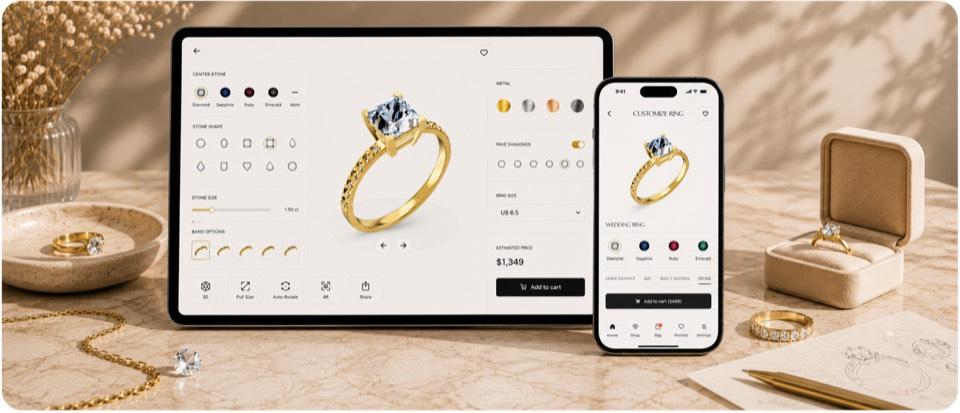
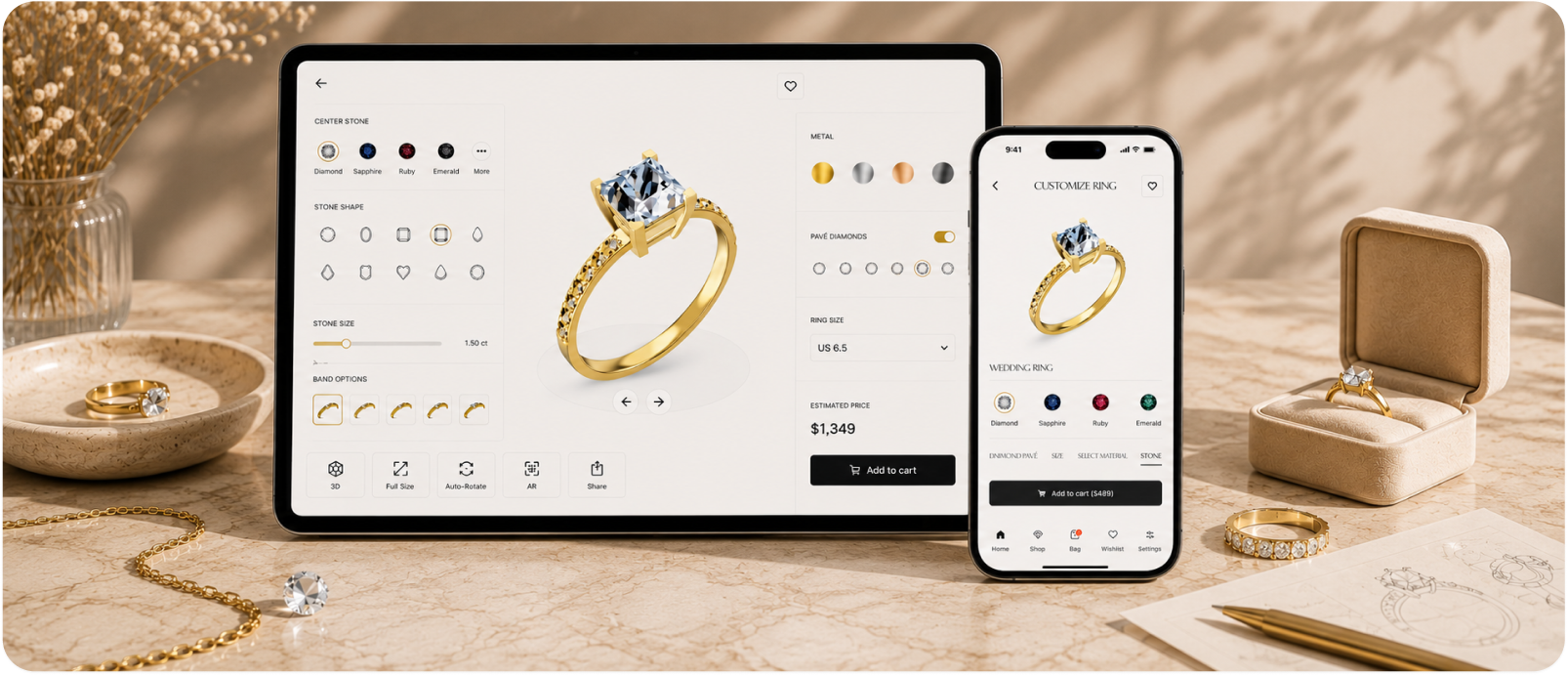
The Todor3D WebGL studio pairs Three.js and React Three Fiber with a full product stack, so the 3D scene can talk to pricing, carts and CRMs. One example is a ring configurator where stones, metal and engraving change in real time, the price follows, and shoppers can try the ring on in AR through 8th Wall; that build sits in the $10,000–50,000 band.
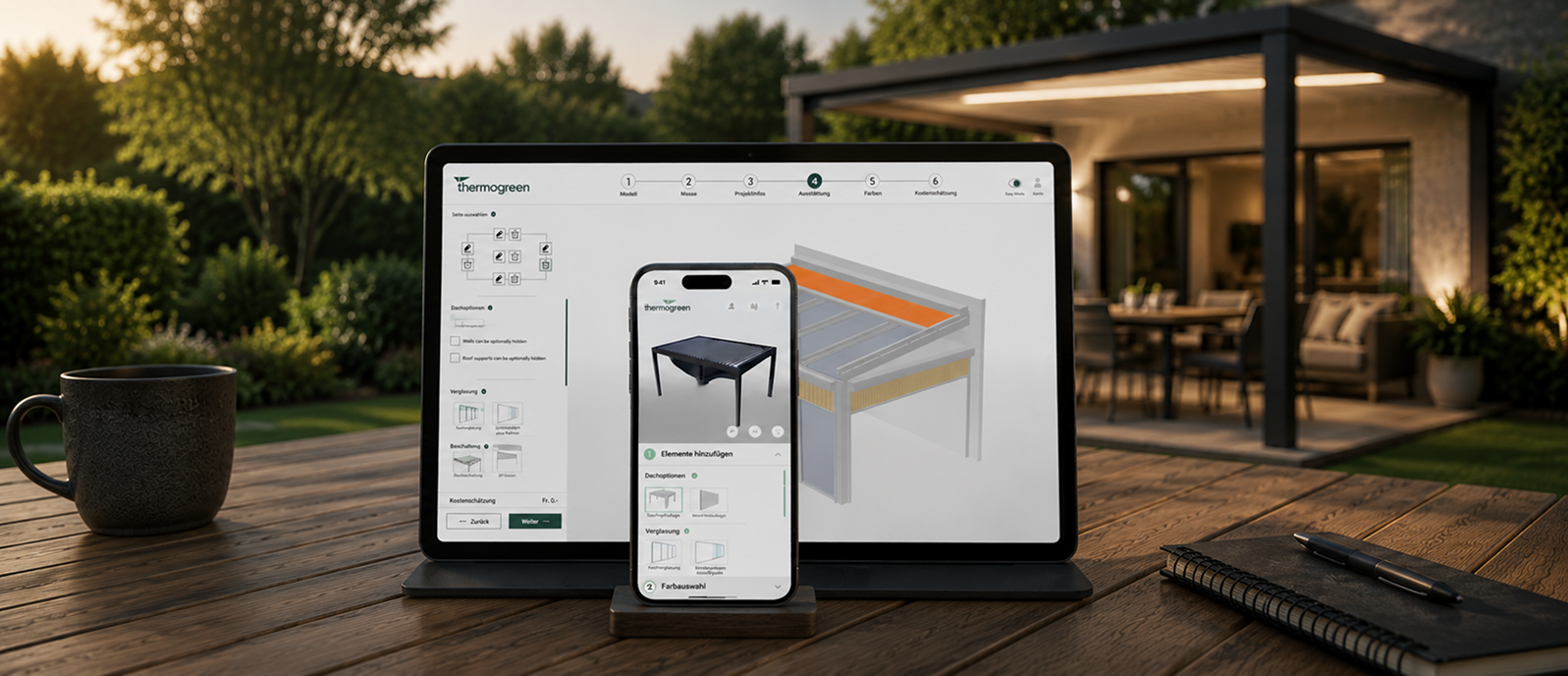
The same pattern runs through a patio cover configurator for Thermogreen AG in Switzerland, live since 2023. As customers resize modules, the scene requests prices from the manufacturer's ERP, and on submission it sends a bill of materials and 3D snapshots to the sales team.
The studio's office is at 6101 W Centinela Ave #110 in Culver City, and it holds 5.0 across 25 Clutch reviews.
Active Theory
Active Theory has worked from Venice since 2012 and builds on a web toolset it developed in-house, which it credits for the quality and performance of its projects. Even the studio's own website loads as an interactive real-time scene instead of a page of text.
Best fit: a high-visibility launch where the browser experience is the product, and the budget allows for experimentation.
Noomo Agency
Noomo Agency lists WebGL development next to 3D websites and immersive web experiences on its service menu. Its site shows a 2025 Webby win in Technical Achievement for Noomo Labs and 23 Awwwards entries.
Its projects lean toward scroll-driven 3D storytelling, so it suits marketing teams more than teams building a transactional tool.
Stay3D
Stay3D builds 3D commerce sites and product configurators for ecommerce brands. Its service list separates custom WebGL and Three.js development, including custom shaders, from standard configurator work, and pairs it with Node.js backends and storefront builds.
That focus on commerce makes it a reasonable shortlist candidate for an online store that needs a product viewer more than a brand film.
Trigger XR
Trigger XR calls itself The Mixed Reality Agency and builds augmented and virtual reality for entertainment marketing, fan engagement and augmented shopping. WebGL and responsive web appear among its listed capabilities, alongside mobile AR and its status as a Vuforia preferred developer.
It is a strong option when the browser scene is one channel of a larger AR campaign that also runs in apps.
Buck
Buck's Los Angeles studio is animation-first, but its portfolio includes a WebAR poster that runs entirely in the browser and an AR garden demo for Google ARCore.
Bring Buck in when the look of the 3D matters most and the interaction is light.
Campaign WebGL and Product WebGL Are Different Jobs
The six studios above split into two kinds of work. Campaign builds, the specialty of Active Theory, Noomo Agency and Buck, are made for a launch window: they have to look remarkable on day one and survive a traffic spike, and they are rarely changed after the campaign ends.
Product builds, such as configurators and commerce viewers, live for years. They need a codebase other engineers can read, automated tests around pricing logic, a way to add new SKUs without a developer, and a plan for browser updates that change how WebGL behaves.
| Requirement | Campaign experience | Product tool |
|---|---|---|
| Lifespan | Weeks to months | Years, with regular releases |
| Data connections | Few or none | Pricing, cart, CRM or ERP |
| Who updates content | The studio | Your business team, ideally |
| What to test | Visual quality, load under traffic | Pricing accuracy, rules, device coverage |
Before choosing, decide which of the two you are buying. A studio that excels at one is not automatically the right partner for the other.
Five Questions to Ask a Three.js Team Before Signing
The answers below separate teams that ship stable browser 3D from teams that ship a demo. Ask them in the first technical call and expect specific numbers back.
- How heavy will the scene be? Ask for a target download size for the first view and how the rest loads in stages. A team that has shipped production work will talk about megabytes, draw calls and texture compression without hesitating.
- How does it behave on a mid-range phone? Request a test link on a real Android device, not a recorded video. Ask what the scene drops (shadows, reflections, resolution) when the device is slow.
- What model format will you use? GLB is the usual delivery format for Three.js projects. Ask who converts your CAD files, how polygons are reduced, and whether the models stay usable for AR.
- Who builds the 3D models? Some studios model in-house in Blender or similar tools; others expect finished assets. Model count is often the largest line in the budget, so settle it before the estimate.
- What happens after launch? Ask how new products and options are added, whether the business team can do it through an admin panel, and how support is priced. A configurator with a growing catalog is a product, not a one-time site.
Also ask how the 3D layer will be embedded. A scene that lives inside your React or Next.js app, shares state with the cart and passes data to your CRM is a different job from an iframe dropped onto a landing page.
FAQ
How much does a WebGL or Three.js project cost?
Todor3D's published case studies run from $10,000–50,000 for a ring configurator or a closet configurator to $50,000–100,000 for an ERP-connected patio cover configurator and $100,000–250,000 for a no-code configurator platform. The main cost drivers are the number of 3D models, pricing and option rules, integrations with commerce or ERP systems, and AR. Ask every studio for a scoped estimate after a discovery call.
Is WebGL fast enough for mobile?
Yes, if the team plans for it from the start. Compressed GLB models, staged loading and fallbacks for weaker devices let configurators and 3D maps run on phones, as the Dubai map Todor3D built for Marketika does on desktop and mobile.
Should we use Three.js or a game engine?
Three.js and React Three Fiber fit products that live inside a website and share data with it. Engines such as Unity make more sense for VR headsets and standalone apps, where the experience does not need to sit inside a web page.
What should we send a studio before the first call?
Send product files or existing 3D models, a list of options with their pricing logic, the platform your site runs on, and the devices your customers use most. Those four inputs decide most of the estimate.