 English
 Arabic
 French
 Deutsch
 Turkish
 Dutch
Dutch
 Italiano
 Russian
 Romaian
 Greek
Greek

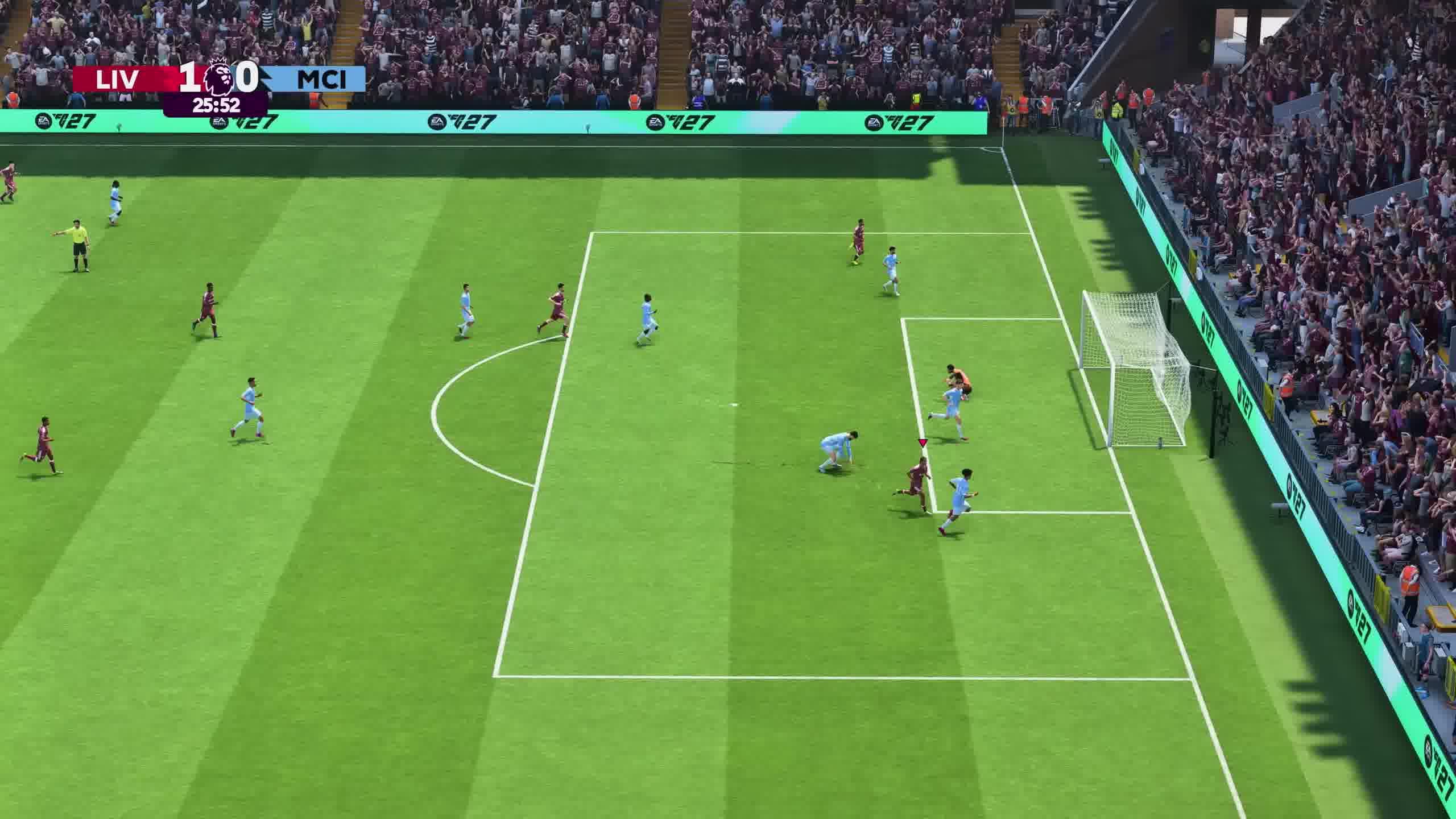
Building a successful football team has never been solely about collecting the highest-rated players. Football is a system, and EA Sports FC 27 appears determined to make that principle more important than ever in its Career Mode.
The reported Authentic Gameplay 2.0 framework connects tactical instructions with player characteristics, making recruitment a process of finding individuals who can execute a specific style.
That is particularly relevant to Attacking Spatial Awareness.
In real football, elite attackers do not simply run forward. They interpret defensive structures, identify gaps, manipulate defenders, and time their movements. FC 27 reportedly models these concepts more closely, meaning off-ball intelligence can become a major factor in determining how effective a player is.
For managers, this creates a new scouting priority.
A midfielder who understands half-spaces can be extremely valuable in a possession system. A forward who recognizes when to make a curved run behind a defensive line can create opportunities without ever touching the ball.
This means player evaluation becomes multidimensional.
A footballer with an impressive overall rating might still fail to maximize your system if his movement patterns do not complement your tactics. Conversely, a less famous player could become an important starter because his attributes fit the team's requirements perfectly.
Off-Balance Dribbling introduces a similar principle to physical play.
Traditional football games often represent dribbling through relatively simple attributes such as agility, balance, and ball control. FC 27 reportedly adds a more detailed physical calculation involving momentum and body contact.
This could make winger recruitment particularly interesting.
An extremely fast attacker might struggle when repeatedly challenged by strong defenders. Another winger with slightly less acceleration but superior physical stability could maintain forward momentum more effectively.
The same principle applies across the pitch.
Defenders need to match the demands of their tactical system. A high defensive line requires recovery speed and positioning. A low block may prioritize strength, anticipation, and aerial ability. A possession system may require center-backs who are comfortable with the ball.
Consequently, tactics become the starting point for recruitment rather than something managers adjust after assembling a squad.
The reported TransferRoom integration reinforces this philosophy. If player valuations change dynamically and rival clubs compete aggressively for targets, managers cannot simply wait until they have a problem before entering the market.
They must plan ahead.
A club playing a particular style might maintain a recruitment database containing players who fit its tactical requirements. If a key starter leaves, the manager already knows which candidates can replace him.
Financial management makes this even more important. A manager who spends the entire budget on one superstar may be unable to address weaknesses elsewhere.
For players who follow FUT 27 Coins, this broader concept of resource allocation may feel familiar, but FC 27 Career Mode places the emphasis on organizational sustainability rather than simply squad improvement.
The AI opposition also contributes to the challenge. Rival managers reportedly analyze your tactical approach and adapt their defensive structures during matches.
That means a successful tactic cannot remain completely static.
If opponents learn to block your preferred passing lanes, you may need players capable of changing the rhythm of the attack. A squad with multiple tactical profiles could therefore be more valuable than one built around a single rigid system.
This has implications for squad depth.
Instead of keeping eleven stars and a collection of substitutes, managers may want complementary players. One winger could provide explosive pace against high defensive lines, while another offers strength and ball retention against compact opponents.
The result is a more sophisticated definition of squad quality.
The strongest team is not necessarily the team with the highest average rating. It may be the team with the greatest tactical flexibility.
Youth development further supports this model. Prospects can reportedly receive specialized mentorship through The Grounds, allowing managers to shape players according to long-term tactical requirements.
That could eventually produce a squad where every player has a defined purpose.
FC 27's reported systems therefore move Career Mode toward a deeper simulation of football strategy. Managers are not simply selecting names from a database. They are designing a football machine in which recruitment, tactics, physical characteristics, movement intelligence, finances, and development all interact.
For players interested in cheap FIFA Coins, the wider FC ecosystem offers its own form of strategic resource management. But FC 27's offline experience appears to deliver something different: the satisfaction of constructing a tactical identity over multiple seasons.