 English
 Arabic
 French
 Deutsch
 Turkish
 Dutch
Dutch
 Italiano
 Russian
 Romaian
 Greek
Greek

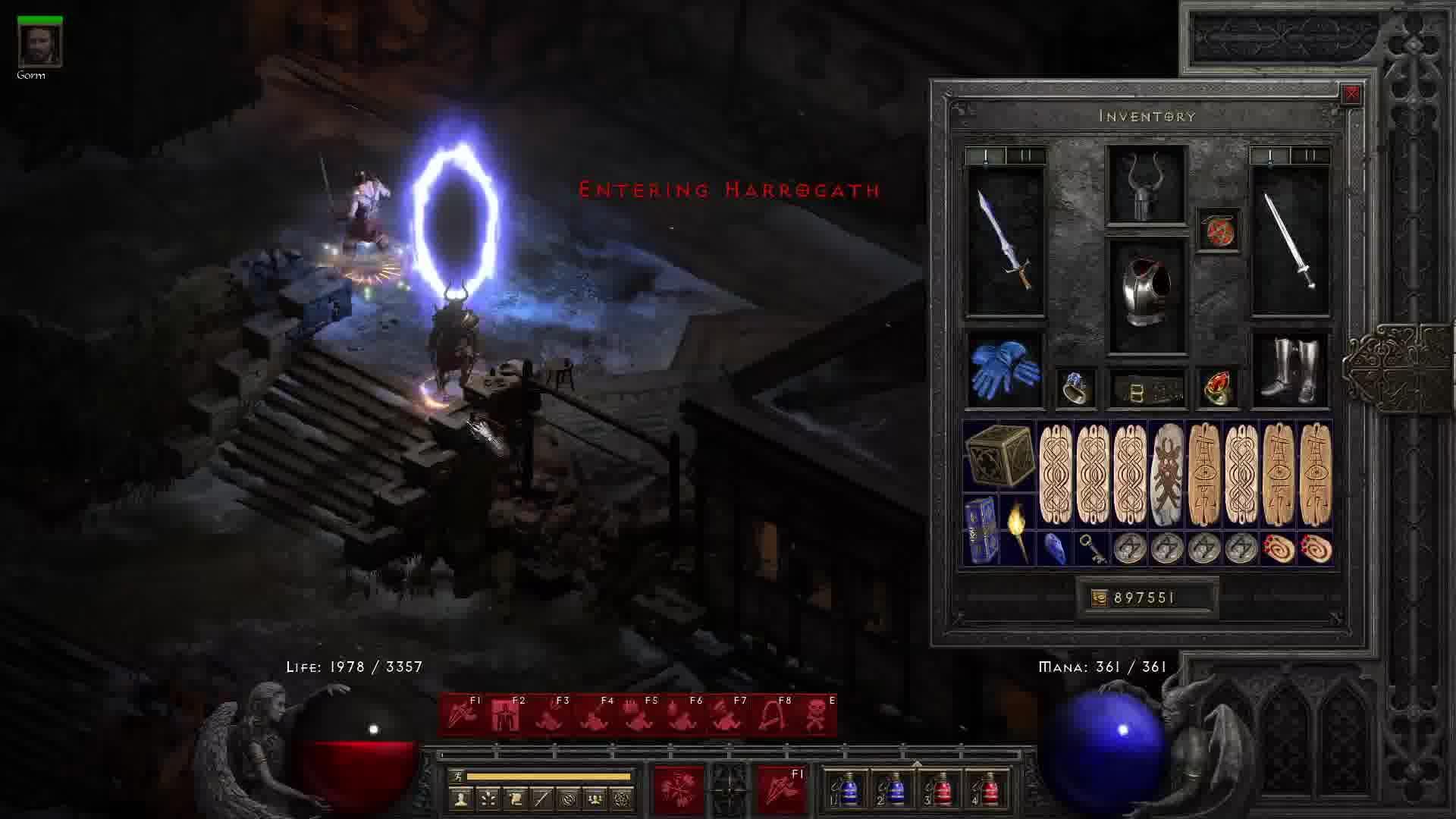
One of Diablo II: Resurrected's most valuable systems for advanced players is the ability to rebuild a character. Without respec mechanics, experimenting with complicated builds would be extremely risky. A player could spend dozens of hours developing a character only to discover that its final configuration does not perform as expected.
D2R Items avoids that problem by allowing characters to reset their attributes and skills.
The first opportunity comes from the Den of Evil quest. Completing this early quest provides a free stat and skill reset. Additional resets can be earned through the same system across difficulty levels, giving players several chances to completely rethink their characters.
For long-term endgame experimentation, Tokens of Absolution provide another option. These can be created using specialized Essences obtained from Act bosses on Hell difficulty. Once acquired, the Token provides another complete reset.
This system changes the philosophy of character development. Players are no longer required to treat their first build as a permanent decision. Instead, they can experiment, collect information, and modify their character based on actual gameplay.
That is particularly valuable in a game with so many interacting systems.
Suppose a player creates a caster and discovers that the current gear setup cannot reach an important Faster Cast Rate breakpoint. Instead of abandoning the character, the player can reconsider the skill and equipment combination. Perhaps a different weapon is necessary. Perhaps an amulet or ring needs to change. Perhaps the build should sacrifice some damage for additional speed.
Respecs make these experiments practical.
The same applies to attribute allocation. A player may initially invest Dexterity for one weapon, only to discover that another equipment configuration works better. A respec can move those points elsewhere. A character that originally focused on one defensive strategy can be rebuilt around another.
This flexibility also encourages players to explore different builds during Ladder seasons. D2R's evolving environment can make certain configurations more attractive depending on mechanics, balance adjustments, and community discoveries.
For theorycrafters, respecs are almost like laboratory equipment. Each rebuild creates an opportunity to test a hypothesis.
Equipment experimentation becomes especially interesting in this environment. A player might collect several D2R Items designed for different goals and then switch between configurations. One setup might focus on maximum FCR, another on resistance, and another on raw damage. Testing these combinations provides information that theory alone cannot always predict.
Some players may also D2R Ladder Items for sale specifically to accelerate this kind of experimentation. Having alternative gear available allows comparisons between multiple builds without requiring an enormous farming investment before each test.
The most important benefit of respecs, however, is psychological. They reduce the fear of making mistakes.
In a complex game, experimentation is essential to learning. If every incorrect decision permanently ruins a character, players naturally become conservative. They follow established guides and avoid unusual ideas. When resets are available, players become more willing to explore.
That exploration can produce unexpected discoveries.
A build that appears inefficient on paper may perform extremely well in a particular farming environment. A skill combination that seems unconventional may become effective when paired with the right equipment. A defensive configuration may outperform a glass-cannon approach because it allows uninterrupted farming.
Respecs therefore contribute directly to D2R's long-term replayability.
They also help explain why the game's theorycrafting community remains active. Players can constantly revisit old builds and ask whether they can be improved. A new item, mechanic, or strategy can inspire an entirely different configuration without requiring everyone to start from zero.
The ability to reset does not make character building meaningless. Quite the opposite. It makes optimization more interesting because players can actually test their ideas.
Ultimately, D2R's respec system turns Sanctuary into an experimental environment. The game gives players a character, a collection of mechanics, and a series of mathematical constraints, then allows them to repeatedly redesign the solution.
For players who enjoy discovering the perfect configuration rather than simply following a guide, that freedom is invaluable.