 English
 Arabic
 French
 Deutsch
 Turkish
 Dutch
Dutch
 Italiano
 Russian
 Romaian
 Greek
Greek

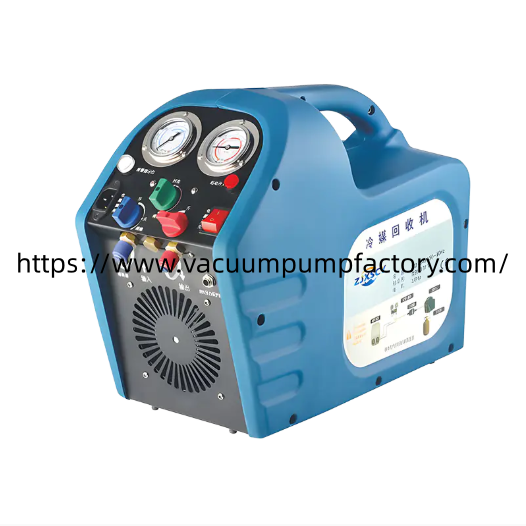
HVAC Refrigerant Recovery Machine Supplier selection requires more than comparing prices or product photos. Buyers should consider the refrigerants they work with, expected recovery workload, machine configuration, electrical requirements, connections, operating environment, and applicable standards. Current buyer guidance also places strong attention on refrigerant compatibility, recovery capacity, and certification requirements, while A2L applications require additional consideration.
Start With Your Actual Application
Before contacting a supplier, identify how the equipment will be used.
A residential HVAC technician may have different requirements from a commercial refrigeration contractor or an automotive service workshop. Workload, equipment size, refrigerant type, transportation needs, and service frequency can all influence the appropriate configuration.
A clear application description allows the manufacturer to discuss specifications based on actual working conditions instead of offering a generic recommendation.
Check Refrigerant Compatibility
Refrigerant compatibility should be one of the first questions on a purchasing checklist.
Different machines may be designed for different refrigerant categories, so buyers should verify compatibility with the refrigerants used in their target market. R-32, R-454B, R-410A, R-134a, R-1234yf, and other refrigerants can involve different equipment considerations.
For newer A2L applications, buyers should pay particular attention to whether the equipment has been appropriately tested or certified for the intended refrigerant. Industry guidance specifically warns that a general multi-refrigerant claim does not automatically establish A2L suitability.
Compare Recovery Capacity
Recovery capacity should match the expected workload.
A small service business working mainly with residential equipment may have different requirements from a commercial operation handling larger systems throughout the day.
Buyers can compare vapor recovery, liquid recovery, and push-pull capabilities where applicable. Published specifications can vary considerably between machines and refrigerants, so it is useful to review the actual performance data rather than relying on a general statement about recovery speed.
The goal is to select a configuration that corresponds with the work being performed.
Review Compressor And Motor Specifications
The compressor is a central part of a recovery machine, so its specifications deserve careful attention.
Buyers can review compressor type, motor power, operating voltage, frequency, cooling arrangement, and other technical details.
Oil-less compressor designs are available in some recovery equipment and may be preferred for particular applications. However, the appropriate configuration depends on the intended refrigerant, workload, and equipment design.
Ask the manufacturer for complete specifications instead of comparing motor power alone.
Check Electrical Requirements
Electrical specifications can become an important issue for international buyers.
Confirm the required voltage, frequency, plug configuration, motor specifications, and applicable electrical requirements for the destination market.
For example, a model designed for one electrical system may require a different configuration for another region.
If you are purchasing for distribution, checking these details before production can help avoid unnecessary changes to inventory or packaging.
Look At Connection Options
Connections should match the service equipment used by your customers.
Review inlet and outlet fittings, hose connections, thread standards, adapters, and included accessories.
A recovery machine may be technically suitable for an application but less convenient if its connections do not match the existing service setup.
Providing the manufacturer with your preferred connection standards can make the product discussion more precise.
What About A2L Refrigerants?
A2L refrigerants have become an important consideration for HVAC equipment buyers.
Some newer refrigerants are mildly flammable, which means equipment selection should take the applicable safety requirements into account. Buyers should not assume that a machine designed for conventional refrigerants is automatically appropriate for A2L applications.
The EPA also maintains requirements and certification information for refrigerant recovery and recycling equipment used with different categories of air-conditioning and refrigeration appliances.
When purchasing for a particular market, verify the applicable local requirements and the manufacturer's supporting documentation.
Consider Portability
For technicians working at multiple locations, portability can influence product selection.
Review machine weight, carrying handles, case design, hose storage, dimensions, and overall layout.
A compact design may be convenient for mobile service work, while a larger configuration may be considered for workshop or commercial applications.
The right choice depends on how frequently the equipment needs to be transported.
Check Operating Temperature
Working environments can vary significantly.
A recovery machine may be used inside workshops, outdoors, in service vehicles, or around refrigeration equipment. Buyers should review the manufacturer's stated operating temperature range and other environmental requirements.
This information can help distributors determine whether a particular model fits the working conditions of their target market.
Ask About Safety Features
Safety features deserve careful review, particularly when equipment is intended for newer refrigerants or professional service environments.
Depending on the model, buyers may want to discuss high-pressure protection, overfill protection, electrical protection, automatic shutoff functions, and other relevant features.
The exact requirements will depend on the equipment design and intended refrigerant.
Do not rely only on product descriptions. Ask for technical documentation that explains the applicable protection functions.
Review Quality Inspection
Before placing a larger order, buyers can ask how the equipment is inspected.
Potential inspection points may include electrical operation, compressor performance, pressure functions, connections, switches, appearance, accessories, and packaging.
For OEM orders, buyers can also establish specific inspection requirements before production begins.
Clear specifications make it easier for both sides to understand what should be checked before shipment.
Can The Supplier Support OEM Requirements?
For importers and private label brands, customization can be an important part of supplier selection.
Depending on the product and order, buyers may discuss logo placement, product labels, packaging, instruction manuals, colors, accessories, and other configuration requirements.
At vacuumpumpfactory, these requirements can be discussed according to the buyer's target market and intended product configuration.
It is useful to confirm customization possibilities before production rather than after the order has already been arranged.
Review Production And Order Conditions
For distributors, production arrangements can influence purchasing plans.
Ask about minimum order quantities, sample availability, production schedules, packaging requirements, inspection arrangements, and shipping preparation.
If you expect repeat orders, discuss whether the same specifications can be maintained across future production runs.
This can help with inventory planning and reduce unnecessary communication when placing subsequent orders.
Compare Documentation
Technical documentation is another practical consideration.
Buyers may need specifications covering refrigerant compatibility, electrical requirements, recovery performance, operating conditions, connections, maintenance, and safety information.
Clear documentation can help distributors prepare product listings and help technicians understand the intended application.
For international markets, manuals and labels may also need to follow specific language or regulatory requirements.
Look Beyond The Product Price
Price is an important purchasing factor, but it should be considered alongside the complete sourcing arrangement.
Compare technical specifications, compatibility, production capabilities, customization, quality inspection, packaging, documentation, and communication.
A supplier that fits your actual requirements may make the purchasing process easier to organize.
For B2B buyers, a clear comparison can also help distinguish between products that appear similar but have different configurations.
Build A Practical Supplier Checklist
Before making a purchasing decision, review:
Refrigerant compatibility
Recovery capacity
Vapor recovery performance
Liquid recovery performance
Push-pull capability
Compressor type
Motor power
Voltage and frequency
Connection standards
Hose options
A2L compatibility
Safety functions
Operating temperature
Portability
Accessories
Quality inspection
OEM options
Packaging
Production schedule
Technical documentation
This checklist can help buyers organize supplier comparisons around actual purchasing requirements.
Make The Choice Around Your Market
A recovery machine should be evaluated according to the work it is expected to perform.
Consider your customers, refrigerants, service environment, expected workload, electrical standards, connection preferences, and purchasing volume.
For importers, distributors, HVAC contractors, and private label brands, this approach can create a clearer path from product selection to production planning.
Rather than focusing on one specification, look at the complete combination of product compatibility, technical details, manufacturing arrangements, and customer requirements.